The Best Strength Training Program for Women Over 40
If you're over 40 and your workouts look exactly the same as they did in your 20s or 30s, it may be time for a change.
Not because your body is suddenly “too old” to exercise—but because your goals may have changed.
Maybe you don't care about running yourself into the ground anymore. Maybe you want to feel stronger carrying groceries, playing with your kids or grandkids, getting up from the floor, traveling, or simply moving through your day without feeling stiff and exhausted.
That's where strength training comes in.
Why Strength Training Matters More After 40
As we get older, maintaining muscle becomes increasingly important. Strength training can help support muscle mass, bone health, balance, mobility, and the physical capacity we need for everyday life.
But here's the important part:
You don't need to train harder. You need to train smarter.
A good strength training program for women over 40 should include exercises that challenge your muscles while also respecting your joints, mobility, recovery, and current fitness level.
What Should a Strength Training Program Include?
A well-rounded program doesn't need to be complicated.
Think about training these basic movement patterns:
1. Squat
Squatting helps build strength for everyday movements like getting into and out of a chair.
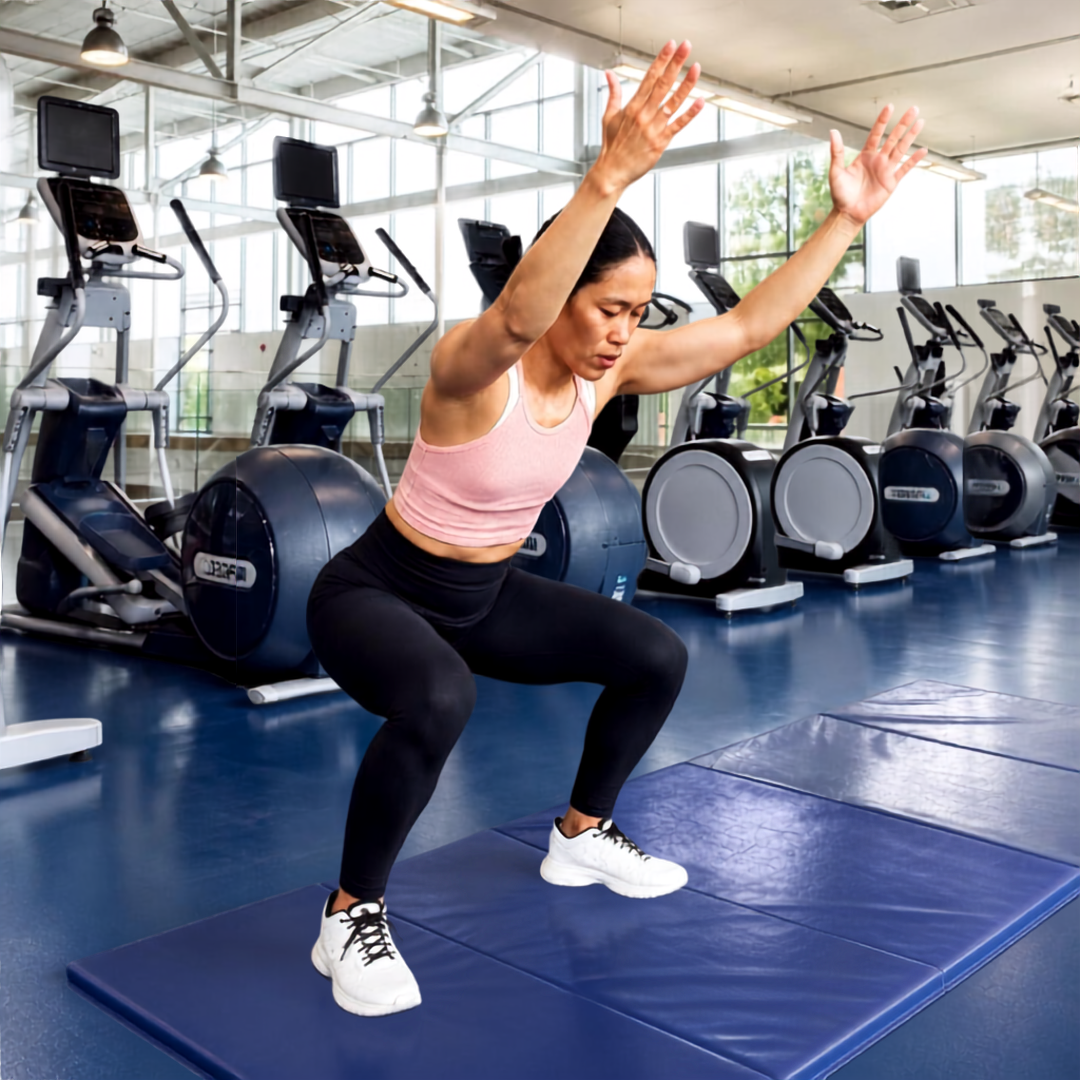
Touchdown Squats
2. Hinge
Hinge movements train the hips and posterior chain and teach you how to safely pick things up from the floor.
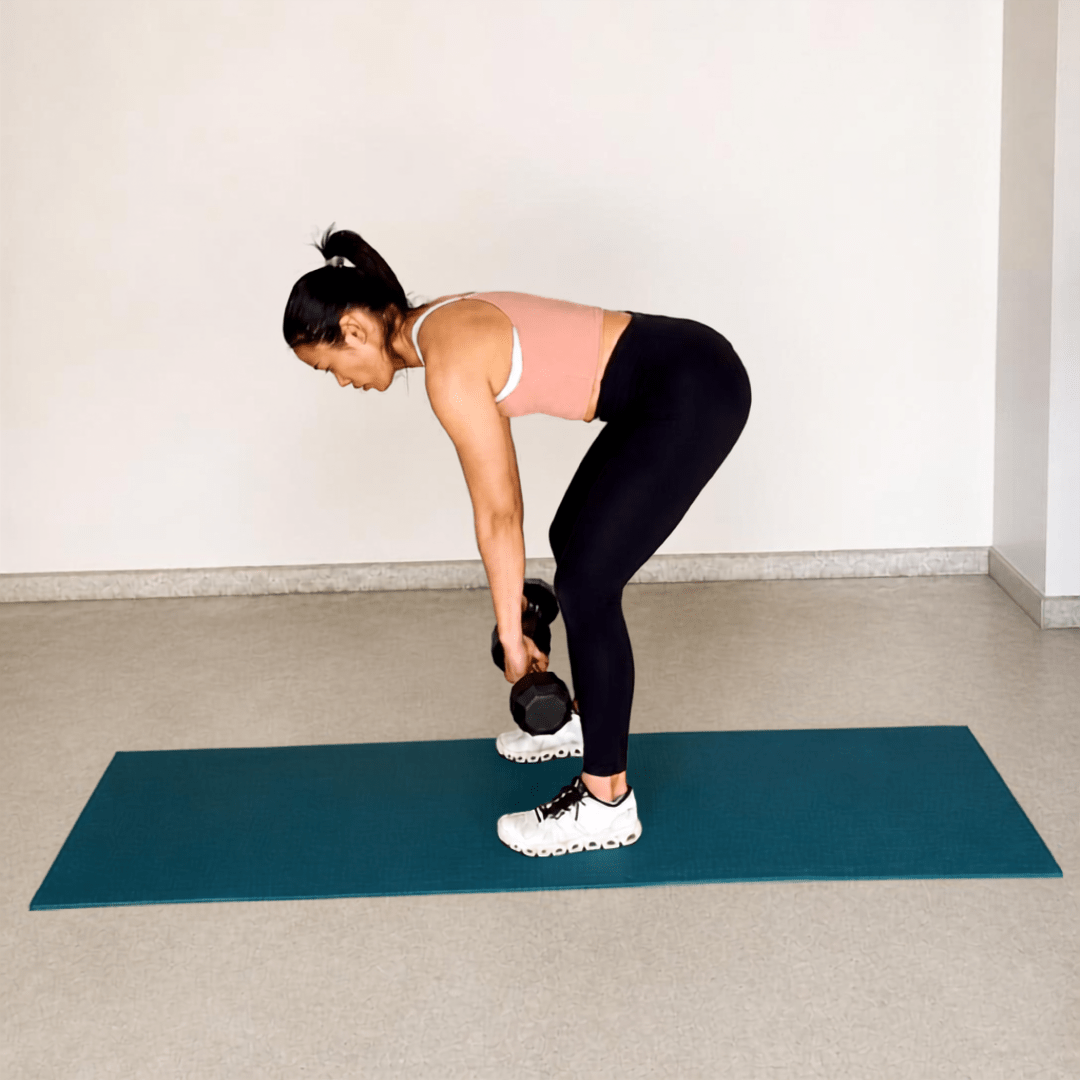
Dumbbell Romanian Deadlift
3. Push
Push exercises strengthen the chest, shoulders, and arms.
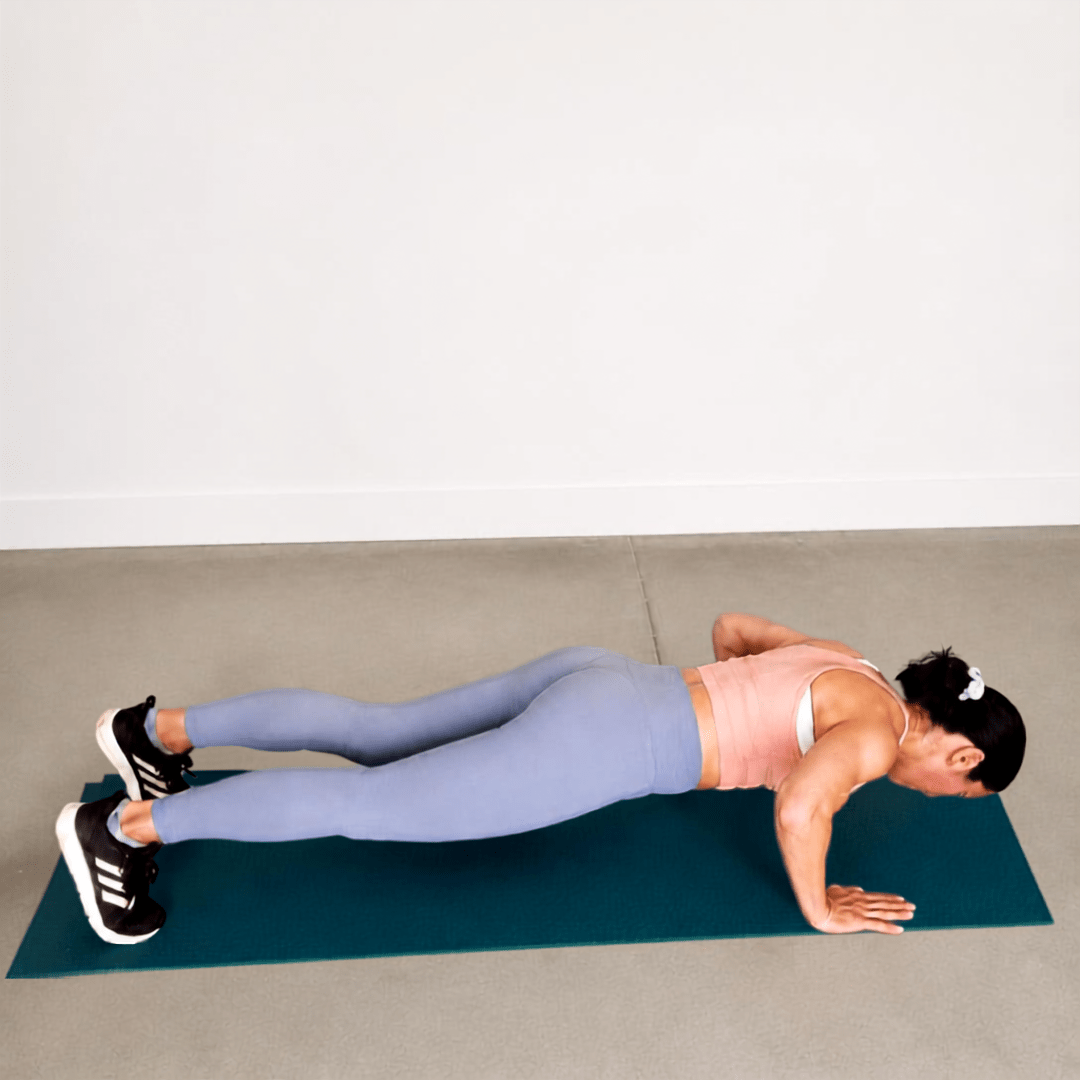
Push-Up
4. Pull
Rows and other pulling movements help develop upper-body strength and support healthy shoulder movement.
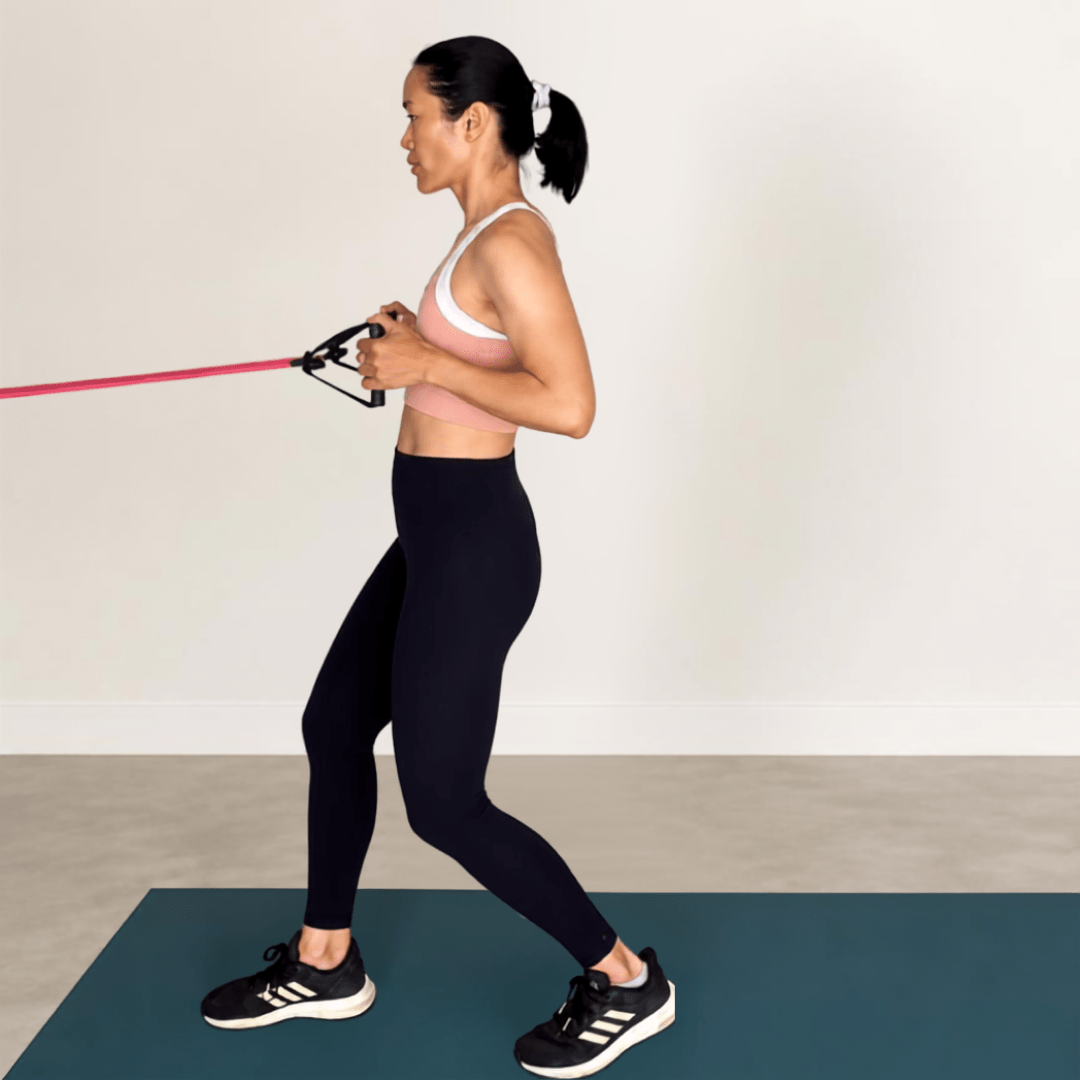
Standing Band Rows
5. Carry
Carrying weights is incredibly functional. After all, life involves carrying groceries, luggage, bags, and occasionally a grandchild.
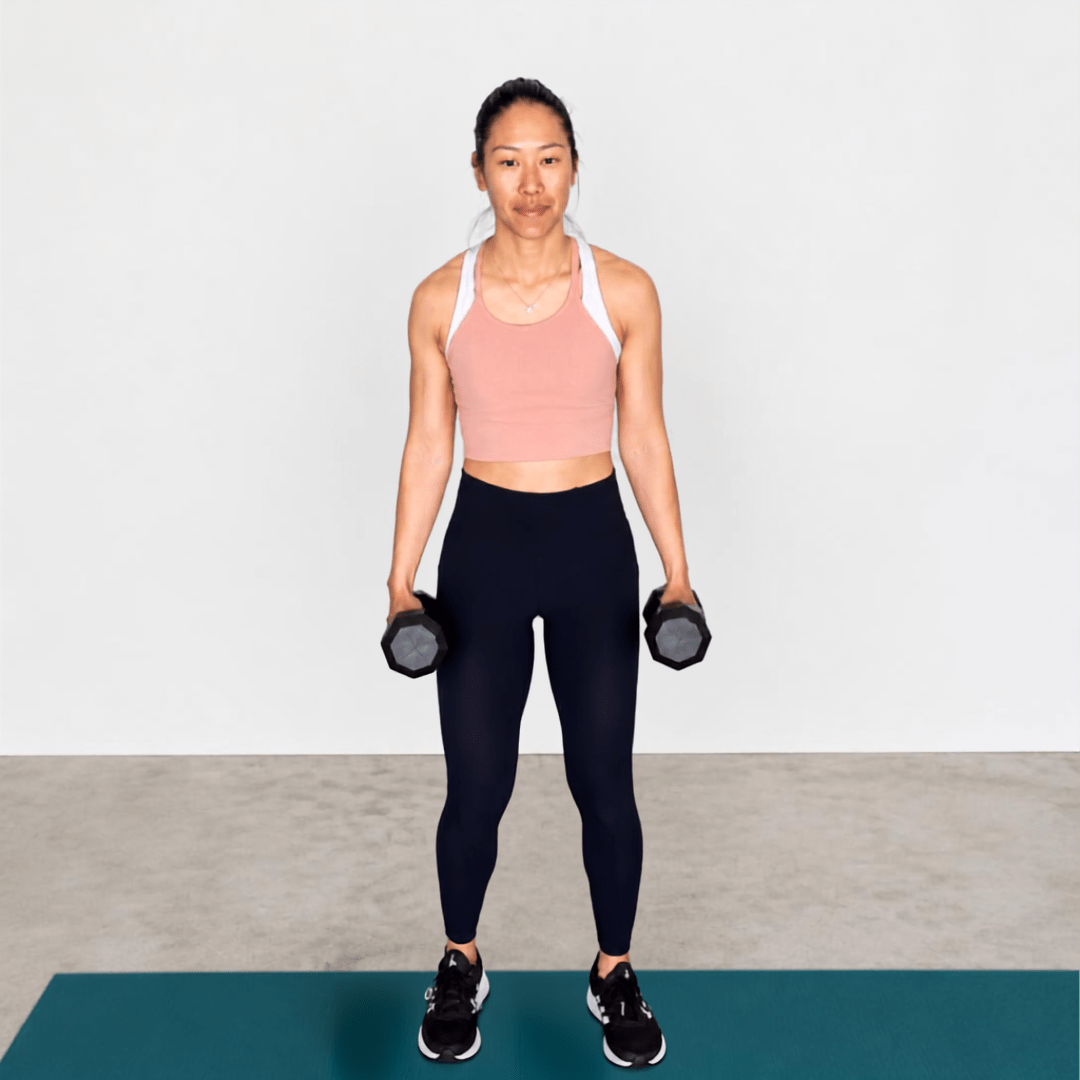
Farmer's Carry
6. Rotate and stabilize
Your body needs to control rotation and resist unwanted movement. This is an important part of building functional strength.
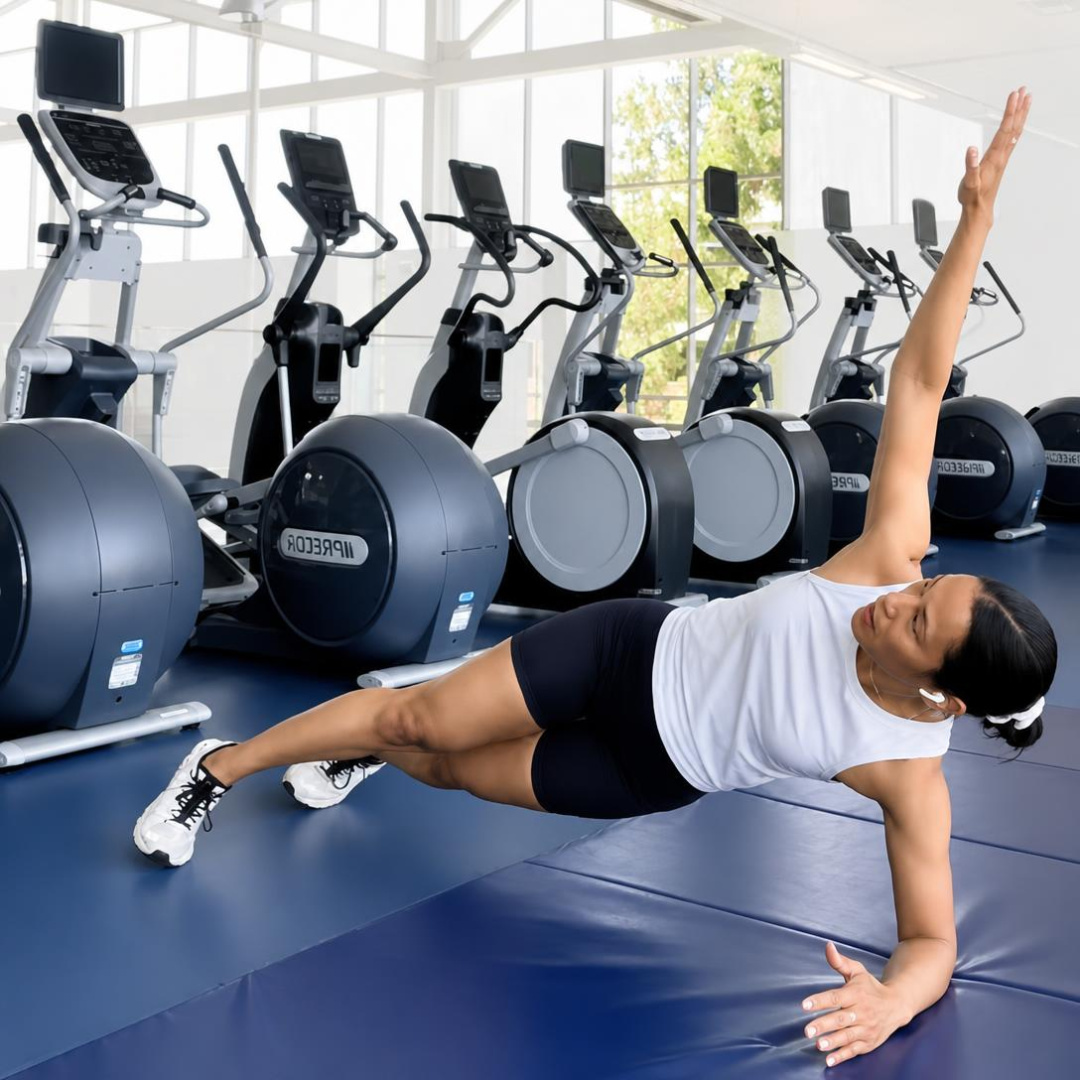
Plank rotations
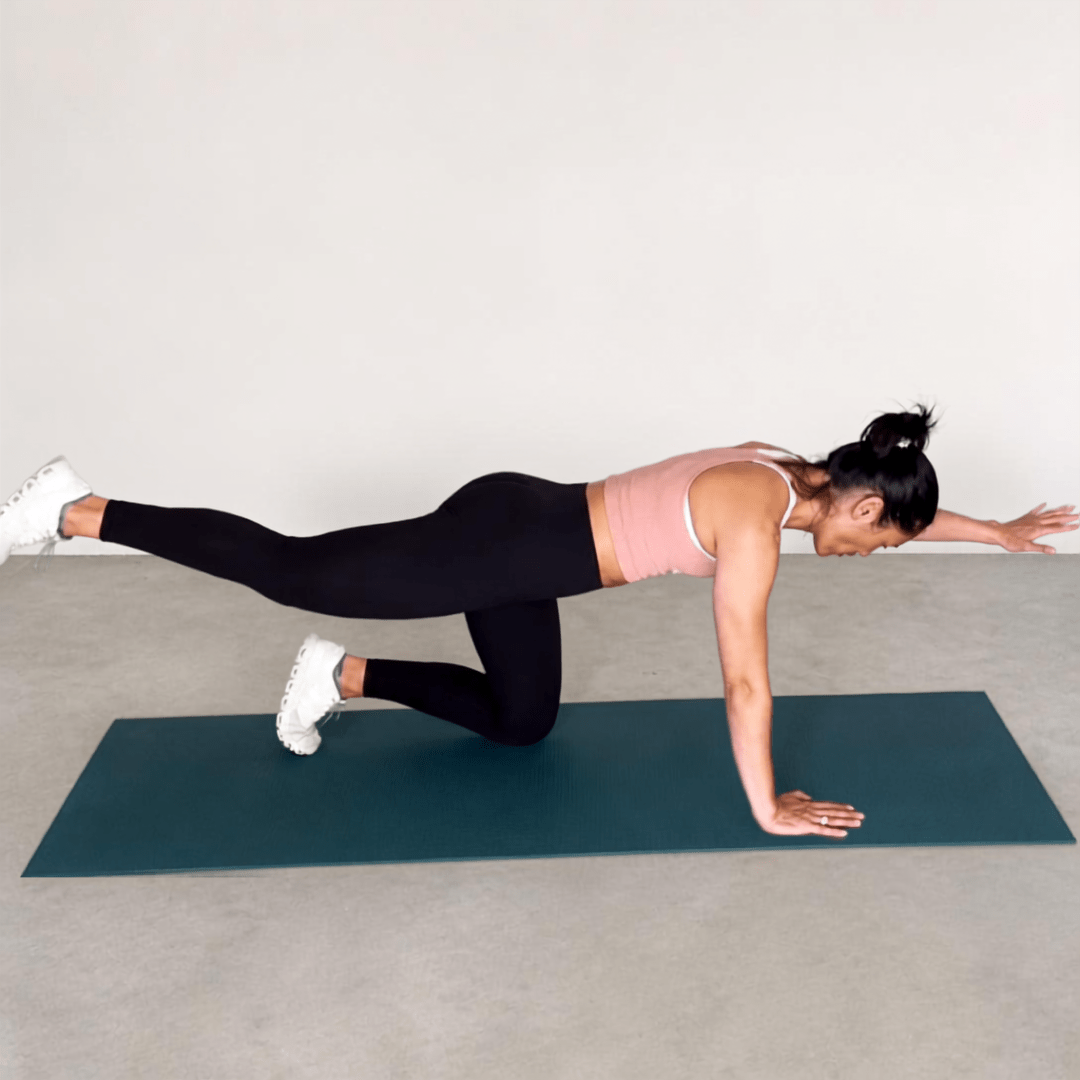
Bird Dog
How Many Days a Week Should You Strength Train?
For many women over 40, two to three strength sessions per week can be a great starting point.
You don't need to spend an hour every day in the gym.
Consistency matters much more than perfection.
A simple weekly schedule might look like:
Monday: Full-body strength
Tuesday: Walking or mobility
Wednesday: Full-body strength
Thursday: Recovery or light movement
Friday: Full-body strength or mobility
Weekend: Enjoy being active
The exact schedule should depend on your goals, experience, recovery, and lifestyle.
What About Cardio?
You don't have to choose between strength training and cardio.
Walking, hiking, cycling, swimming, dancing, and other cardiovascular activities can all be valuable.
But if you're currently doing mostly cardio and very little strength training, adding resistance training may be one of the most beneficial changes you can make.
Don't Forget Mobility
Here's where I see many people miss an important piece.
Strength and mobility aren't competing goals.
You want both.
Being strong through a limited range of motion isn't the same as being strong and capable throughout the ranges of motion your life requires.
That's why mobility work can be an important part of a strength program for women over 40.
The Biggest Mistake?
Trying to do too much too soon.
You don't need the hardest workout.
You need a workout you can recover from, repeat, and progress over time.
Start where you are. Learn the movements. Build consistency. Then gradually increase the challenge.
That's how sustainable strength is built.
The Bottom Line
Your 40s, 50s, and beyond aren't a time to stop challenging your body.
They're a time to become more intentional about how you challenge it.
Strength training can help you build the physical capacity to live the life you want—not just look fit in the mirror.
And that's a very different goal.
Want to learn how to build strength and mobility that actually translates into everyday life?
That's exactly what I help adults over 40 do through Kinected Fit Coaching.